
Clem
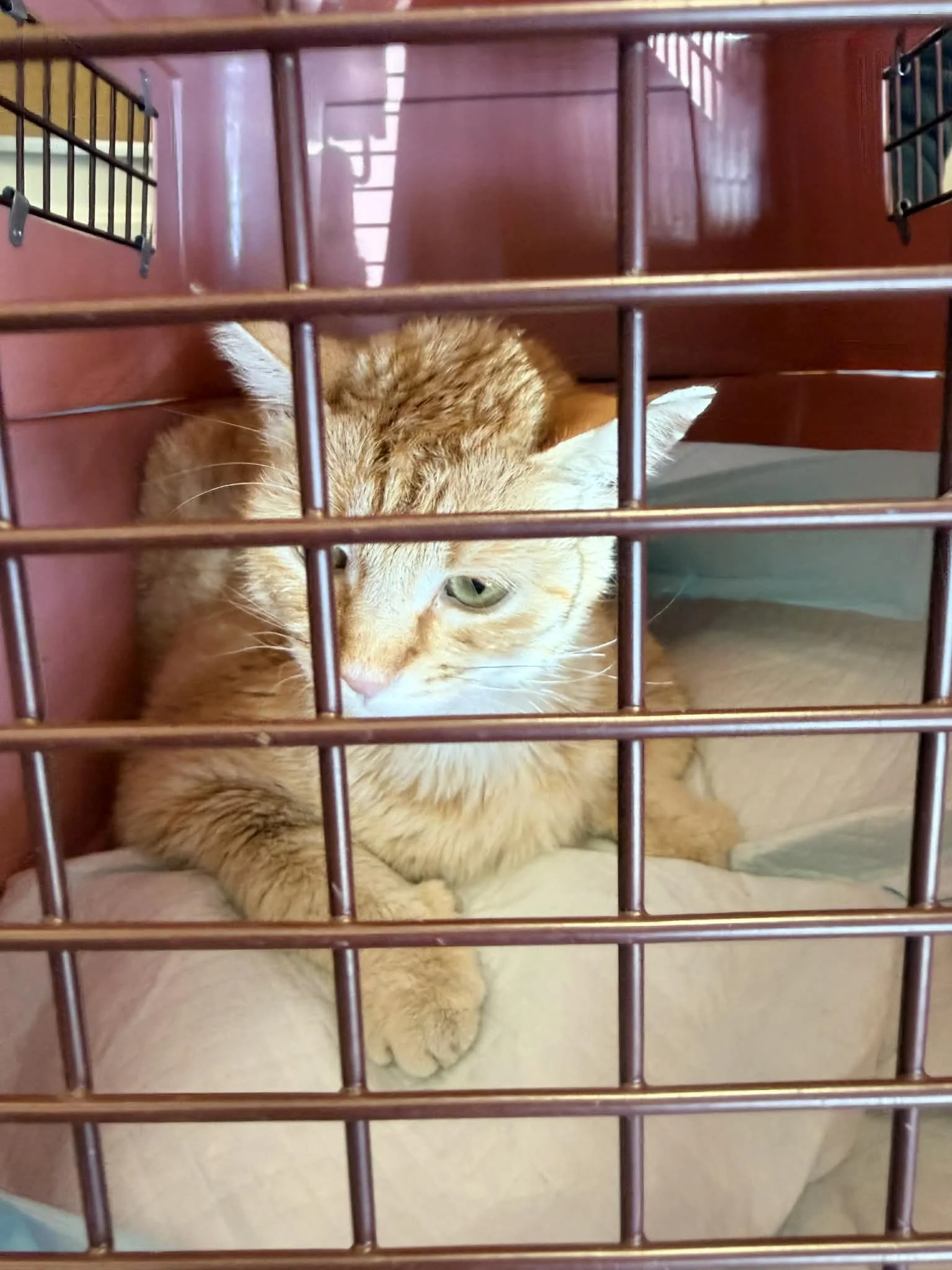
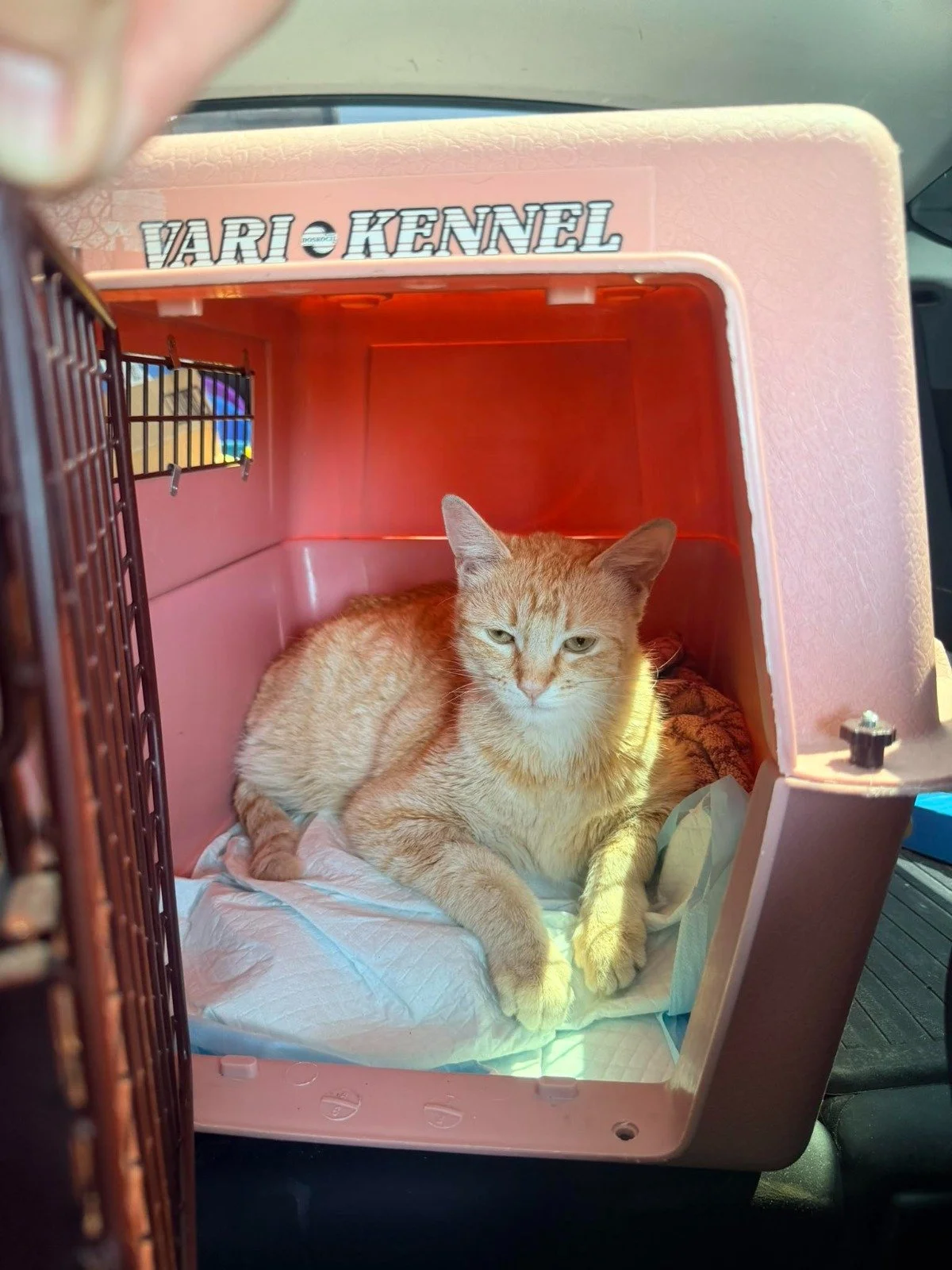
Her name was Clem. A two-year-old orange and white tabby. She came into a municipal shelter in Southern California on March 29.
On April 1 the shelter recorded her medical notes:
Thin — BCS 3/9. Mammary glands engorged, unable to express milk. Purulent vaginal discharge. Radiographs — at least 3 fetal skeletons visible. Consider spay ± abdominal exploratory.
The shelter's behavior notes on her read:
Sweet and gentle. Chirps softly when petted. Easy to handle. Always seeking affection.
They did not say how beautiful her big eyes were.
The X-ray showed several skeletons. It could not show whether the kittens were alive or dead. The ultrasound that would have was never done. The surgery was not performed. Her mammary glands were too swollen. The infection named on her chart ran its course.
A rescue was ready to pull her on Saturday: foster secured, clinic in place.
Then the shelter closed for two days.
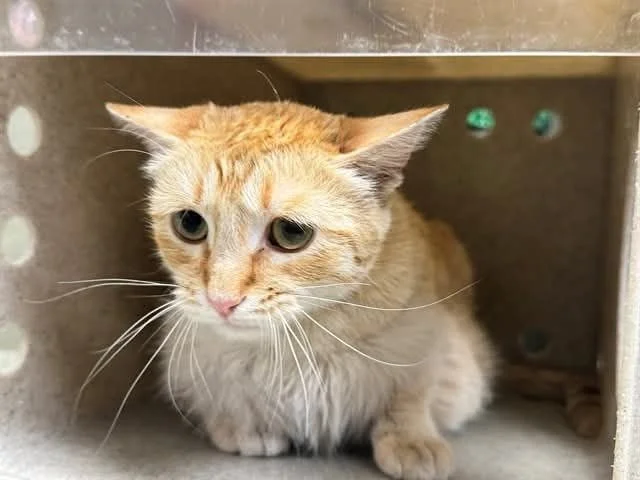
Clem held on
Through the sepsis spreading through her blood. Through the fluid rising in her body, the weight on her breathing, the pain she could not tell anyone about.
Ten days, from the morning she came in to the day the door opened. She fought.
When she was brought to the vets, she could barely breathe. Gabapentin eased her pain. A way to perform her surgery was tried. There was none — her heart was already too weak. She was held, warm, by the people who had committed to save her and already loved her.
The necropsy named what the ultrasound had not. Uterine torsion with rupture. Necrotic fetuses. It had been going on a long time.
The chain was built and held. The system did not.
The kennel opened. And yet she died.
Her name was Clem, for her eyes and because she was ginger.